
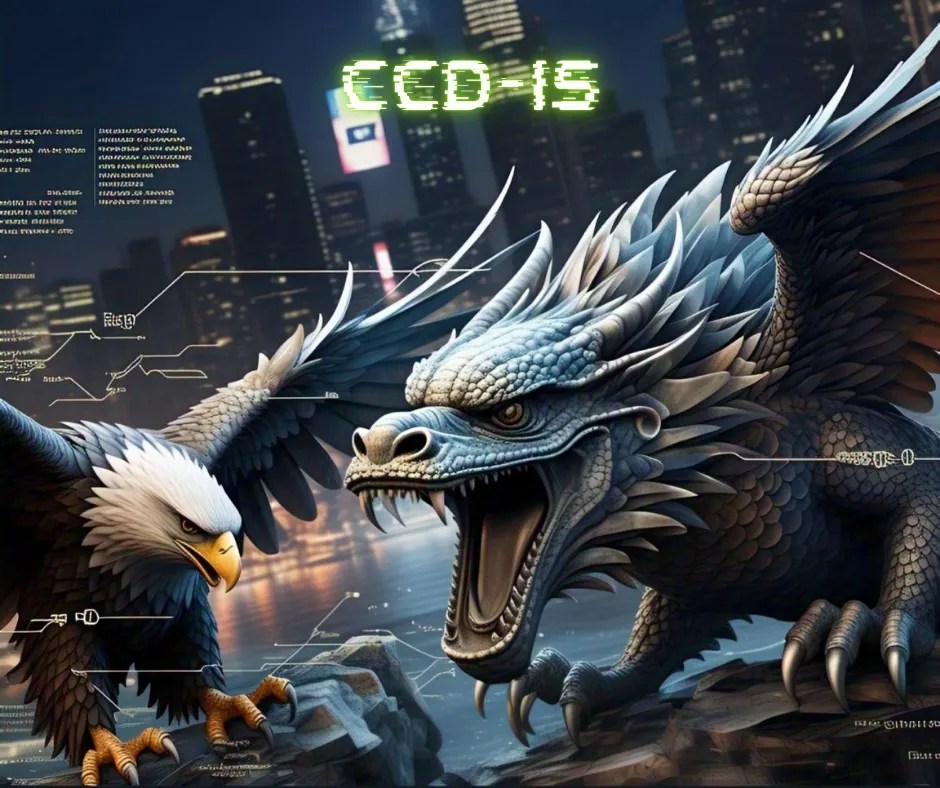
Writing in August 2016, I analyzed the then-emerging US-China cyber landscape. Looking back at that analysis today offers a valuable perspective on how the cyber domain has evolved, and the persistent challenges we still face.
1. Geopolitical Dynamics of U.S.-China Cyber Relations
The relationship between the United States and China in cyberspace is marked by increasing tension, as both nations vie for dominance in the digital realm. Despite the agreement signed in 2015 between President Barack Obama and Chinese President Xi Jinping to limit cyber espionage, particularly targeting intellectual property, China’s strategic use of cyber tools has not ceased. Rather, China has adapted its tactics, shifting focus to more subtle and expansive methods of cyber influence.
Strategic Shift in China’s Cyber Operations:
Initially, China’s cyber operations targeted U.S. private sector networks for economic espionage, causing significant financial damage. However, recent trends suggest that China has recalibrated its cyber strategy, redirecting efforts toward more vulnerable targets in third-party nations. Additionally, China’s use of sophisticated cyber tools, such as malware that operates directly in system memory without leaving traces, has further complicated efforts to track or attribute cyberattacks.
The Role of U.S. Sanctions:
In response to Chinese cyber activities, the U.S. has employed economic and diplomatic sanctions against Chinese cybercriminals, with notable actions including the FBI’s public listing of Chinese nationals involved in cyber espionage. Although these measures have likely resulted in a temporary reduction in some forms of cyber activity, the underlying threat remains unaddressed.
Political Implications:
In addition to economic motives, Chinese cyber operations are increasingly interwoven with political agendas. For instance, cyberattacks have targeted U.S. political infrastructure, including the Democratic Party’s communications during the 2016 U.S. Presidential Election, demonstrating the growing intersection of cyber espionage and national political interests.
2. The U.S. National Security Strategy in Cyberspace
The U.S. National Security Strategy (NSS) places a significant emphasis on cybersecurity as a key pillar of national defense. The strategy outlines a broad framework for defending against cyber threats, focusing on:
- Strengthening Critical Infrastructure: The U.S. has prioritized the protection of key sectors such as energy, finance, and communications from cyberattacks.
- Expanding Offensive Cyber Capabilities: U.S. Cyber Command has been empowered to take proactive offensive measures to disrupt adversaries’ cyber operations.
- Building Stronger Alliances: The U.S. has sought to deepen cyber defense cooperation with allies, particularly NATO and the Five Eyes countries, to improve collective defense against cyber threats.
- Deterrence through Sanctions and Diplomacy: The strategy includes the use of economic sanctions and diplomatic measures to curb adversarial cyber activities, particularly focusing on China and Russia.
Challenges to the U.S. Cyber Strategy:
While the NSS presents a robust framework, several key challenges remain:
- Attribution Challenges: The difficulty in attributing cyberattacks — especially those originating from state-backed actors like China — complicates the U.S.’s ability to respond decisively.
- Lack of International Regulatory Standards: The absence of comprehensive international agreements on cyber norms means that nations like China can operate with relative impunity, expanding their cyber influence without facing significant consequences.
- Cybersecurity as a Domestic Issue: The increasing intersection of cyber espionage with domestic political events, such as elections, has made cybersecurity not just a foreign policy issue but a critical concern for national governance.
3. DeepSeek: A Strategic Continuation of Chinese Cyber Policy
The newly launched DeepSeek project is not an isolated technological advancement but a direct continuation of China’s long-term strategy to assert its cyber dominance. This project exemplifies China’s broader ambitions to influence global digital infrastructure, challenging U.S. preeminence in cyberspace.
State-Supported Initiative:
Though DeepSeek is presented as a private initiative, given the Chinese government’s close oversight of key tech sectors, it is unlikely that this project operates without significant state involvement. DeepSeek’s development reflects China’s intent to reduce its dependence on Western technologies while advancing its own capabilities in AI and cybersecurity.
A Tool for Information Warfare:
DeepSeek also serves as a potential tool for China to extend its influence in global information warfare. As part of its broader strategy of digital sovereignty, China seeks to shape global narratives and counter Western digital dominance through initiatives like DeepSeek.
A Challenge to U.S. Cyber Capabilities:
In this context, DeepSeek should be understood not only as a technological innovation but also as a strategic maneuver designed to counterbalance U.S. cyber capabilities, particularly in areas such as AI-driven cyber defense and offensive operations.
4. Game Theory Analysis: Cooperation vs. Confrontation
The U.S.-China cyber relationship can be framed within the Prisoner’s Dilemma of game theory, where both sides face critical decisions that influence global cybersecurity dynamics.
Scenario 1: Cooperation (Adherence to Cyber Norms)
✔️ Advantages:
- Reduced cyberattacks and economic damage.
- Enhanced international regulatory frameworks for cybersecurity.
- Improved diplomatic relations and mutual trust-building.
❌ Disadvantages:
- Risk of China secretly continuing its cyber operations despite agreements.
- The U.S. may be forced to limit its offensive cyber capabilities in the absence of transparency.
Scenario 2: Non-Cooperation (Ongoing Cyber Conflict)
✔️ Advantages:
- The U.S. maintains an offensive edge in cyber operations.
- China faces mounting technological restrictions from Western nations.
❌ Disadvantages:
- The escalation of cyberattacks could destabilize global digital security.
- Increased vulnerability of critical infrastructure across both nations.
Conclusion: While a continued cyber conflict is feasible, it is ultimately unsustainable. The current framework of agreements, such as the 2015 U.S.-China cyber accord, has proven ineffective in curbing China’s activities due to a lack of binding enforcement mechanisms.
5. The Need for New, Robust Cybersecurity Agreements
As the author, it is clear that current agreements between nations are insufficient for ensuring global cybersecurity. To address the evolving threats in cyberspace, it is crucial to establish new, more comprehensive frameworks.
Key Recommendations:
- Develop Stronger International Cyber Agreements: These agreements should be backed by enforceable mechanisms and mutual accountability.
- Enhance Cyber Alliances: Strengthen the collaboration among democratic nations to build a more resilient global cybersecurity framework.
- Expand Sanctions on Cybercriminals: Use global legal instruments to target and sanction individuals and entities engaged in cybercrime.
- Improve Private Sector Cybersecurity: Strengthen cybersecurity measures within critical infrastructure and private industries to safeguard against espionage.
- Limit Chinese Technology in U.S. Infrastructure: To mitigate risks, the U.S. must restrict the use of Chinese technology in sensitive areas of national security.
Conclusion
Cyberspace is no longer merely a technological domain; it is the battleground for global influence. The rivalry between the U.S. and China continues to evolve, with China’s cyber capabilities — embodied by initiatives like DeepSeek — posing a growing challenge to U.S. digital dominance. For the U.S. to maintain cybersecurity resilience, it must move beyond reactive measures and develop robust, enforceable agreements to counteract China’s expanding cyber influence.
Author: Vladimir Tsakanyan


Leave a reply to The Trump Doctrine: Why Political Will Has Done More for U.S. Cybersecurity Than Technical Measures – Center for Cyber Diplomacy and International Security Cancel reply