-

The Sovereignty Paradox: Can Governments Control the AI They Depend On?
Britain’s challenge in regulating frontier artificial intelligence reveals a shift in state power dynamics, as private tech firms control capabilities crucial to national security. Although legal authority remains with governments, reliance on these companies complicates effective oversight. As AI’s significance grows, the need for a balance between public authority and…
-

When Code Hits Cold Metal: How Cybersecurity Manifests in the Physical World
In October 2026, incidents like the French refrigeration sabotage and Ukrainian drone strikes on Russian data centers highlight the convergence of digital and physical vulnerabilities. Cybersecurity is now integral to national resilience, as disruptions in digital infrastructure have immediate physical and economic consequences, necessitating a rethinking of security strategies and…
-

The Shadow War State: How Hybrid Conflict Is Rewriting Germany’s Postwar Security Doctrine
Germany’s intelligence reform debate centers on balancing enhanced capabilities to counter modern hybrid threats, such as cyber operations and foreign interference, while preserving constitutional safeguards against potential abuses of power. Rooted in historical lessons from dictatorship, this discourse seeks to ensure accountability in an evolving security landscape that challenges traditional…
-

From Five Eyes to Five Models: Is the Intelligence Alliance Becoming an AI-Security Alliance?
The Five Eyes intelligence alliance, established for sharing sensitive information, is evolving as artificial intelligence (AI) becomes a strategic asset. The alliance now faces questions about access to advanced AI capabilities, shifting focus from intelligence sharing to sharing AI production capacity, with implications for cybersecurity and international collaboration.
-

The Digital Great Game: Cyber Capacity Building and the New Competition for Central Asia
Washington’s modest $5 million cybersecurity assistance to Central Asia aims to strengthen digital capacity amid growing geopolitical competition with Russia and China. While financially insignificant, it fosters strategic relationships, enabling the region to maintain technological autonomy. This reflects a shift towards cybersecurity as an essential component of foreign policy.
-

The Invisible Technology Transfer: When Open Research Becomes a National Security Battleground
MI5’s warning regarding Chinese-funded research highlights a significant shift in international security, emphasizing that academic collaboration may inadvertently facilitate technology transfer beneficial to foreign intelligence. While traditional scientific cooperation has fostered progress, the blending of civilian and strategic research raises questions about safeguarding sensitive knowledge without hindering global scientific collaboration.
-
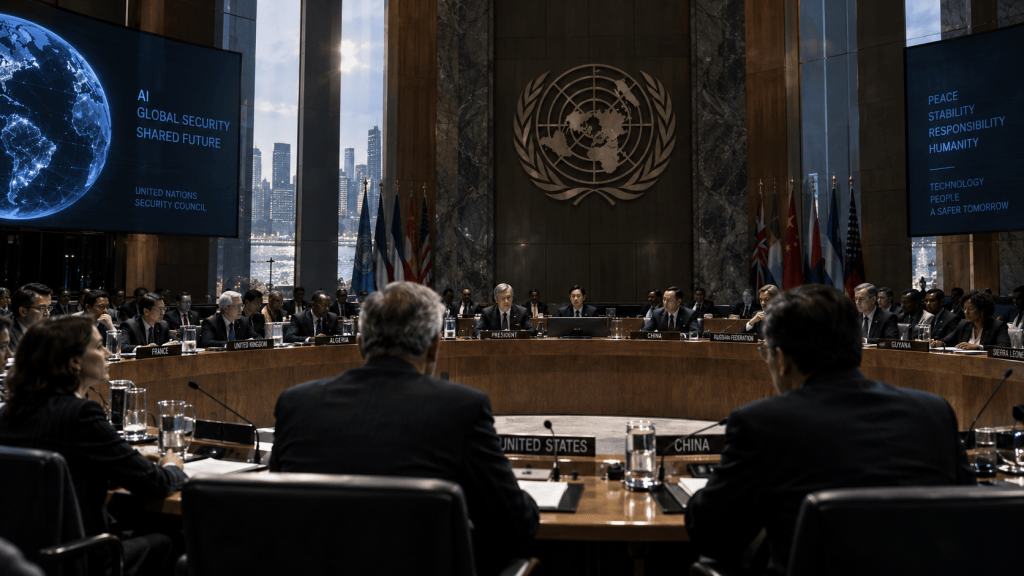
AI Enters the Security Council: Frontier Models Become an Issue of International Peace and Security
AI developers, including DeepSeek and OpenAI, are addressing the UN Security Council regarding the implications of artificial intelligence on international security. This shift signifies AI’s transition from policy discussions to critical security debates, highlighting the need for governance that incorporates both state and private sector insights to manage emerging geopolitical…
-

Root of the Estate: VMware’s vCenter RCE and the Seven-Week Sprint to Ransomware
By Vladimir Tsakanyan, PhD · Center for Cyber Diplomacy and International Security · cybercenter.space Executive Summary On July 29, 2026, Broadcom patched a critical remote code execution vulnerability in VMware vCenter Server — CVE-2026-59310 — and told customers to treat patching as an emergency: a directory traversal in the appliance’s…
-

Root Access by Inbox: Cisco’s Email-Security Zero-Day and the Federal Three-Day Sprint
By Vladimir Tsakanyan, PhD · Center for Cyber Diplomacy and International Security · cybercenter.space Executive Summary On Monday, September 14, 2026, Cisco disclosed that a critical vulnerability in its Secure Email Gateway — tracked as CVE-2026-76461 — was being actively exploited in the wild. The flaw is as grim as…
-

The Seoul Doctrine: South Korea Just Made Stealing Chip Technology an Act of Espionage
South Korea just made stealing chip technology an act of espionage — minimum 3-year sentences for tech leaks to any foreign country. By Vladimir Tsakanyan.
Center for Cyber Diplomacy and International Security
