
Category: CYBER
-

Root of the Estate: VMware’s vCenter RCE and the Seven-Week Sprint to Ransomware
By Vladimir Tsakanyan, PhD · Center for Cyber Diplomacy and International Security · cybercenter.space Executive Summary On July 29, 2026, Broadcom patched a critical remote code execution vulnerability in VMware vCenter Server — CVE-2026-59310 — and told customers to treat patching as an emergency: a directory traversal in the appliance’s…
-

Root Access by Inbox: Cisco’s Email-Security Zero-Day and the Federal Three-Day Sprint
By Vladimir Tsakanyan, PhD · Center for Cyber Diplomacy and International Security · cybercenter.space Executive Summary On Monday, September 14, 2026, Cisco disclosed that a critical vulnerability in its Secure Email Gateway — tracked as CVE-2026-76461 — was being actively exploited in the wild. The flaw is as grim as…
-

The Seoul Doctrine: South Korea Just Made Stealing Chip Technology an Act of Espionage
South Korea just made stealing chip technology an act of espionage — minimum 3-year sentences for tech leaks to any foreign country. By Vladimir Tsakanyan.
-

The Mercenary Memo: How Trump Just Privatized America’s Cyber Offense
Trump’s August memo lets vetted U.S. companies run offensive cyber operations under federal direction. By Vladimir Tsakanyan.
-

The Doomsday Caucus: How a Researcher’s Resignation Dragged Congress Into the AI Catastrophe Debate
An Anthropic researcher’s resignation warning of AI catastrophe broke congressional inertia this week — a bipartisan testing bill, a proposed special session, a US-China dialogue call, and California’s first-in-nation AI audit laws.
-

The Distillation Wars: How AA26-251A Turned Attribution Into America’s New Weapon of AI Diplomacy
On September 8, CISA, NSA and FBI named six Chinese AI companies for industrial-scale distillation of U.S. frontier models. The advisory is less a defensive playbook than a diplomatic weapon — and it reveals how much of America’s AI-containment strategy has yet to be invented.
-
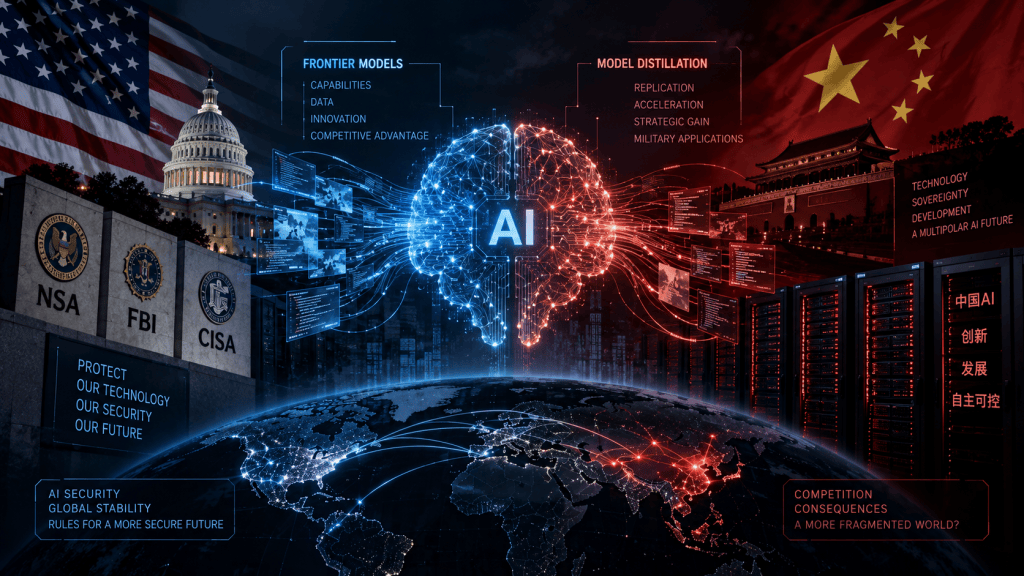
The Model Extraction War: When AI Distillation Becomes a National Security Conflict
U.S. intelligence agencies accuse Chinese AI firms of systematically extracting capabilities from American models, raising national security concerns. China dismisses these claims as unfounded. This conflict highlights the shift in technological competition from hardware to the strategic value of AI capabilities, leading to potential geopolitical implications and the need for…
-

From Sabotage to Diplomatic Retaliation: Europe’s Hybrid Conflict with Russia Enters a New Phase
Russia’s closure of Germany’s consulate escalates a diplomatic confrontation, highlighting how covert hybrid conflicts can transition into formal international relations and necessitating cohesive European deterrence strategies.
-

The Digital Second Front: Iran, Critical Infrastructure, and the Cyber Risks of Military Escalation
Recent Iranian-linked cyber attempts targeting U.S. critical infrastructure highlight the evolving nature of conflict, merging traditional military confrontations with digital warfare. While current attempts lack major disruptions, they underscore the growing significance of cyberspace as a second front, increasing risks of escalation and underscoring the need for robust cyber diplomacy.
-
The Cyber Coalition: Why Rival AI Companies Are Suddenly Calling for Collective Defense
Over 100 organizations, including major AI companies and cybersecurity firms, signed a letter urging a global enhancement of cyber defenses in response to the rise of AI-enabled cyber threats. They emphasize the need for collective action between public and private sectors to address existing vulnerabilities and advance cybersecurity capabilities before…
