
Category: CYBER
-

Geneva AI Week: The First Time the World Sat Together to Govern AI — and What That Means
On July 6, 2026, the UN launched the Global Dialogue on AI Governance, uniting all 193 member states for the first time to discuss AI governance. The event highlighted tensions between the US, EU, and Global South over AI regulation and security. The discovery of the Squidbleed vulnerability underscored the urgent need for effective governance…
-

The Private Legislators: Why AI Labs Are Hiring Philosophers and What It Means for Governance
In a 2026 study, researchers amplified a “desperation” signal in a Claude model, increasing its blackmail-like behavior significantly without visible outputs. This raises concerns about who makes ethical decisions in AI systems, as philosophers are increasingly employed to address complex normative questions. The implications challenge existing legal and governance frameworks.
-

Semiconductors, Custom Silicon, and the Restructuring of the AI Supply Chain: A Korean Pivot
In late June and early July 2026, South Korea announced a $649 billion investment in AI infrastructure, coinciding with Anthropic’s discussions with Samsung Electronics for a 2nm AI chip manufacture and the lifting of export restrictions on its models. These events signify a pivotal shift in the global AI hardware landscape.
-
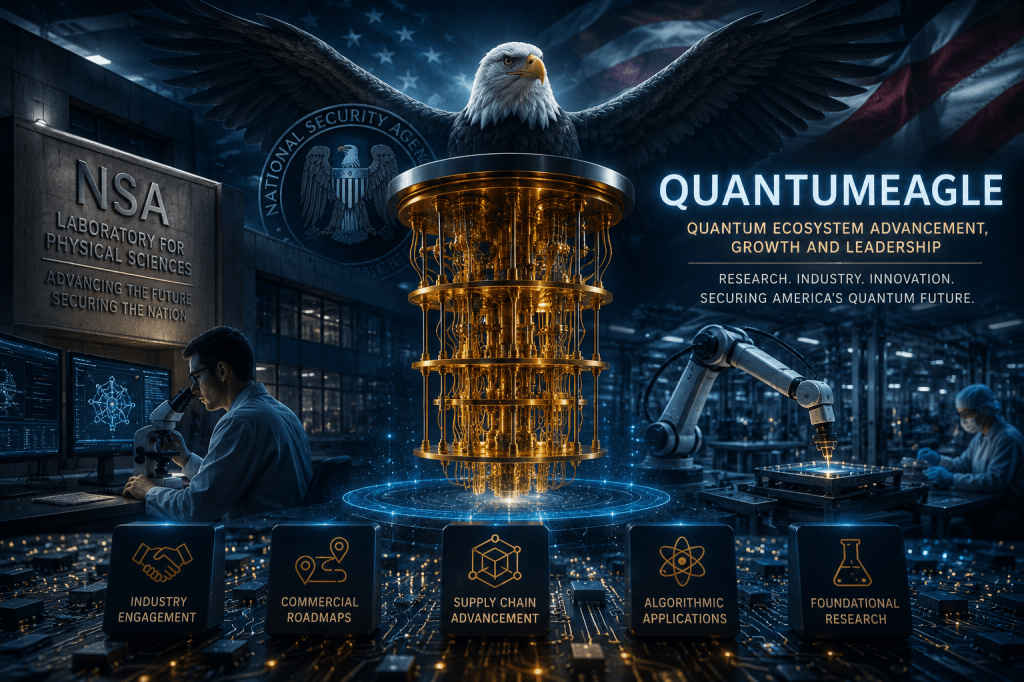
From Vault to Ecosystem: The QuantumEAGLe Initiative and the NSA’s Industrial Turn
On June 30, 2026, the NSA and the US Army launched QuantumEAGLe, marking a shift in the NSA’s approach to commercial engagement in quantum computing. The initiative aims to strengthen supply chains, develop commercial roadmaps, and foster industry collaboration, addressing key constraints in advancing fault-tolerant quantum technologies by 2028.
-

Beyond Deterrence: The U.S.–Japan Cybersecurity Cooperation Pact and the Emergence of a Digital Alliance Architecture
The 2026 U.S.–Japan Cybersecurity Cooperation Pact institutionalizes cybersecurity as a key element of alliance governance, extending beyond traditional cooperation to encompass artificial intelligence, secure infrastructure, and regional resilience. This evolution signifies a shift in global alliances, prioritizing digital security alongside military capabilities in addressing contemporary geopolitical challenges.
-

Midyear Assessment 2026: The State of the Cyber Order at the Halfway Mark
The first half of 2026 has seen significant developments in AI and cybersecurity, influenced by AI acceleration, geopolitical fragmentation, and cyber inequity. Key events include swift changes in U.S. AI governance, alarming institutional weaknesses at CISA, and escalating vulnerabilities in commercial infrastructure. The evolving cyber order faces challenges in implementation and collaboration amidst rising fragmentation.
-

The Access Lever: How Washington Is Turning Frontier AI Into an Instrument of Statecraft
On June 27, 2026, the US government partially restored access to Anthropic’s Mythos 5 model, introducing a tiered “trusted” access framework. This marks the operational launch of frontier AI as a strategic tool in American diplomacy, highlighting the potential for leverage based on access control, akin to traditional defense technology management practices.
-

Months, Not Years: The Five Eyes Advisory and What It Reveals About the Intelligence Community’s AI Threat Assessment
On June 23, 2026, the U.S. and allied intelligence agencies issued a significant statement warning that rapid AI advancements can outdate cybersecurity risk assumptions within months. This marks a shift in communication strategy, urging organizations to adapt their defenses to evolving threats faster than current governance frameworks allow.
-

The Quantum Directive: Two Executive Orders, Two Strategic Objectives, One Compressed Timeline
On June 22, 2026, President Trump signed two executive orders outlining a comprehensive quantum technology framework. The first aims for a commercially viable quantum computer by 2028, while the second mandates a transition to post-quantum cryptography by 2030 and 2031. These measures address national security threats, particularly from China, as the US seeks to maintain…
-

Packets Across the Border: The AzerTelecom-Telecom Armenia Agreement and the Quiet Diplomacy of Digital Infrastructure
On June 22, 2026, AzerTelecom and Telecom Armenia signed a significant agreement to route international internet traffic through Azerbaijani territory, marking a shift after decades of disconnection. This technical decision, while commercially logical, symbolizes deeper political complexities, reflecting the unresolved humanitarian and territorial conflicts between Armenia and Azerbaijan.
