
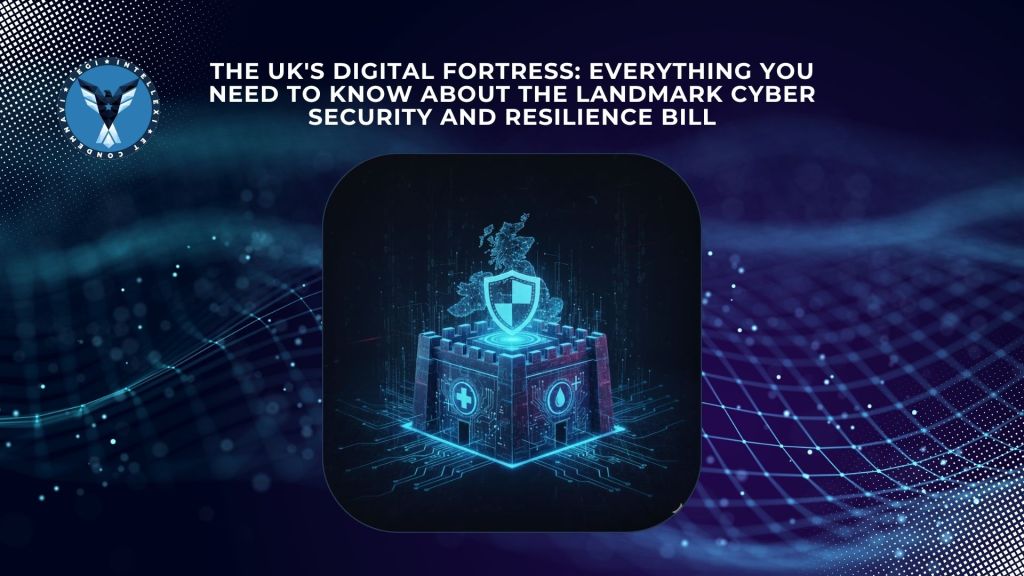
The United Kingdom has declared a decisive victory in the escalating war against cyber threats, moving past recommendations and ushering in a new era of mandatory resilience. The introduction of the landmark Cyber Security and Resilience (CSR) Bill to Parliament signals a fundamental overhaul of the nation’s digital defense strategy.
With cyberattacks estimated to cost the UK economy nearly £15 billion a year, this legislation is not merely an update—it is a clear message to adversaries: the UK is no longer an easy target. Here’s a breakdown of the monumental changes the CSR Bill introduces and why it’s considered a “step change” for national security and business accountability.
Closing the Gap: The Focus on the Supply Chain
The most significant shift in the new legislation is the expansion of its regulatory net. The UK government recognizes that the nation’s most critical institutions—like the NHS and national utilities—are often only as strong as their weakest link. For the first time, the Bill brings the entire digital supply chain into scope.
Managed Service Providers, the medium and large companies that provide essential IT services such as helpdesk support, cloud management, and general IT support to critical sectors, will now be directly regulated. They must adhere to clear security duties. Data centers, those critical hubs of digital activity, are explicitly designated as essential services, ensuring they meet robust cybersecurity standards. Perhaps most significantly, regulators will gain new powers to designate specific suppliers whose services are crucial to essential operations—like companies providing medical diagnostics to the NHS or chemicals to a water utility—forcing them to comply with minimum security standards.
This expansion means that approximately 1,000 more private-sector organizations will face new legal requirements, strengthening the foundation beneath the nation’s core infrastructure. It’s a recognition that in today’s interconnected digital ecosystem, a breach at a third-party vendor can cascade into a national crisis. The 2017 WannaCry ransomware attack that crippled the NHS serves as a stark reminder of this vulnerability. That incident, which affected over 80 NHS trusts and cost the health service an estimated £92 million, wasn’t caused by a direct attack on the NHS itself but rather exploited weaknesses in outdated systems and inadequate security practices across the network.
The supply chain focus represents a maturation in cybersecurity thinking. Traditional approaches treated organizations as isolated fortresses, but modern cyber warfare exploits the digital connections between entities. When a small IT contractor serving a major hospital can become the entry point for a devastating attack, the entire concept of perimeter defense becomes obsolete. The CSR Bill acknowledges this reality and extends regulatory responsibility to match the actual threat landscape.
Mandatory Accountability: Tougher Reporting and Penalties
Gone are the days of vague guidelines and toothless enforcement. The new rules establish clear, non-negotiable standards for incident response and compliance, backed by severe financial penalties that will make executives sit up and take notice.
Under the old NIS Regulations from 2018, reporting requirements were not strictly defined in the same way they are now. Organizations had longer, less specific timelines for reporting incidents. Fines for serious breaches were fixed penalties that many larger organizations could simply absorb as a cost of doing business. The new standard demands 24 hours for an initial report after a significant cyber incident, 72 hours for a full, detailed report to the regulator and the National Cyber Security Centre, and introduces tougher, turnover-based penalties that ensure cutting corners is no longer cheaper than doing the right thing.
Furthermore, the Technology Secretary will be granted new powers to directly instruct regulators and the organizations they oversee—like NHS trusts or utility companies—to take specific, urgent steps to prevent or respond to a cyber threat if it poses a risk to national security. This represents a significant centralization of emergency response authority, a necessary adaptation for an age where digital threats can materialize and spread within hours.
The message is unambiguous: cybersecurity failures will have real consequences, proportional to the size and resources of the organization in question. This approach mirrors penalties seen under GDPR, where fines can reach up to four percent of global annual turnover. For a major utility company or healthcare provider, this could translate to hundreds of millions of pounds—enough to concentrate minds in boardrooms across the country.
The accelerated reporting timelines also serve a critical strategic purpose. In cybersecurity, the first 24 to 72 hours after a breach are crucial. This is when the scope of the attack is assessed, containment measures are implemented, and intelligence about the threat can be shared with other potential targets. By mandating rapid reporting, the CSR Bill transforms individual incidents into collective learning opportunities, allowing the NCSC to identify patterns, attribute attacks to specific threat actors, and warn other organizations before they become victims.
Protecting the Core Services We Rely On
The primary goal of the CSR Bill is to shield the essential public services that underpin daily life and the economy from disruptive attacks. The core sectors benefiting from bolstered protections include healthcare, ensuring fewer canceled NHS appointments and protecting sensitive patient data from ransomware attacks that have plagued health systems globally. Energy infrastructure will see enhanced protection, keeping the lights on by securing power grids and smart appliance infrastructure, including electric vehicle charging points that are increasingly integrated into the national energy system.
Water systems, both drinking water and sewage infrastructure, receive specific attention in the legislation, preventing scenarios where cyberattacks could compromise public health infrastructure. Transport networks—rail, road, and air—gain protection from disruption that could strand millions and paralyze commerce. Digital infrastructure itself, including telecommunications and internet service providers, falls under the enhanced regime, recognizing that these networks are the foundation upon which all other critical services now depend.
These aren’t theoretical concerns. Recent years have witnessed devastating attacks on critical infrastructure worldwide. The Colonial Pipeline ransomware incident in the United States in 2021 led to panic buying, fuel shortages across the Eastern seaboard, and demonstrated how a single compromised system could ripple through an entire economy. Closer to home, the 2021 cyber attack on Ireland’s health service shut down IT systems for weeks, forcing hospitals to cancel appointments and revert to paper-based systems. The UK government has clearly studied these cases and determined that a reactive posture is no longer acceptable.
The inclusion of emerging infrastructure like EV charging points demonstrates forward-thinking planning. As the UK transitions to electric vehicles, the charging network becomes as critical as petrol stations once were. A coordinated attack on this infrastructure could immobilize millions of vehicles and undermine public confidence in the green transition. Similarly, the designation of data centers as essential services acknowledges that in a cloud-based economy, these facilities are as vital as power plants.
Why This Matters Beyond Government Agencies
If you’re a business owner, IT manager, or simply a citizen who relies on public services—which is everyone—this legislation will affect you. The ripple effects extend far beyond Whitehall and into the daily operations of thousands of organizations and the lives of millions of citizens.
For businesses, particularly those in the technology and services sectors, the implications are profound. If you provide any digital services to critical infrastructure organizations, prepare for increased scrutiny and compliance requirements. The days of informal security arrangements and handshake deals are over. You’ll need documented security policies, regular audits, incident response plans, and potentially cyber insurance. However, this also creates opportunities. Organizations that can demonstrate robust cybersecurity practices will become preferred partners, potentially commanding premium rates for their services. The CSR Bill essentially creates a new market for certified secure service providers.
For consumers, the benefits may be less visible but no less real. Expect more reliable essential services with fewer disruptions caused by cyberattacks. The secondary benefit is enhanced protection of personal data as organizations are forced to take security seriously or face punishing fines. When your medical records are stored more securely, when the water treatment plant serving your community has proper safeguards against cyber intrusion, when the trains you rely on for your commute are protected from ransomware, you benefit directly even if you never think about cybersecurity.
For the economy as a whole, a more secure digital infrastructure attracts investment and strengthens the UK’s position as a global financial and technological hub. When international businesses evaluate where to establish operations, cybersecurity resilience is increasingly a determining factor. A country that can credibly claim to have robust protections for critical infrastructure and a clear regulatory framework for digital security becomes more attractive for investment in data centers, fintech operations, and technology research and development.
The Broader Context: A Global Trend
The UK is not acting in isolation. The CSR Bill echoes similar legislative efforts across the democratic world, from the EU’s NIS2 Directive to various American state and federal initiatives. There’s a growing consensus among Western democracies that critical infrastructure protection can no longer be left to voluntary compliance and best practices.
The European Union’s Network and Information Security Directive 2, which came into force in 2023, extends obligations to medium and large entities in sectors including energy, transport, banking, health, and digital infrastructure. It introduces stricter supervisory measures and harmonizes sanctions across member states. Despite Brexit, the UK’s CSR Bill shows remarkable alignment with this European approach, suggesting that cybersecurity concerns transcend political divisions and Brexit arrangements.
What distinguishes the UK approach is its explicit focus on supply chain vulnerabilities—a lesson learned from high-profile incidents like the SolarWinds attack, where compromised software updates allowed adversaries to infiltrate thousands of organizations simultaneously. In that 2020 attack, Russian intelligence services managed to compromise the update mechanism of widely-used network management software, giving them access to multiple US government agencies and numerous Fortune 500 companies. The sophistication of the operation and its supply chain methodology sent shockwaves through the cybersecurity community.
The UK has also been particularly vocal about the threat posed by state-sponsored cyber actors, particularly from Russia, China, Iran, and North Korea. The National Cyber Security Centre regularly publishes threat assessments identifying these actors and their tactics. The CSR Bill gives the government new tools to respond to these threats with speed and coordination that previous legislation lacked.
Challenges and Criticisms
No legislation is without its critics, and the CSR Bill faces several legitimate concerns that deserve consideration. The compliance burden on smaller organizations in the supply chain worries many business owners. A medium-sized IT services company that finds itself newly regulated may lack the resources for a dedicated cybersecurity team, expensive compliance software, or the external consultants needed to navigate the new requirements. There are valid questions about whether adequate support and guidance will be provided, particularly for these medium-sized businesses that form the backbone of the UK economy.
Regulatory overlap presents another concern. Some industry voices have expressed worry about potential duplication with existing frameworks like GDPR, the Payment Card Industry Data Security Standard, and various sector-specific regulations. Creating compliance complexity rather than clarity could lead to confusion, increased costs, and potentially less effective security as organizations struggle to understand which rules apply to which situations.
The implementation timeline presents practical challenges that shouldn’t be underestimated. Bringing 1,000 additional organizations under regulatory oversight within a reasonable timeframe requires significant resources from regulators, clear guidance for affected organizations, and realistic transition periods. There’s a risk that rushed implementation could lead to box-checking compliance rather than genuine security improvements.
Some privacy advocates worry about the Technology Secretary’s new powers to directly instruct organizations on cybersecurity measures. While framed as emergency powers for national security situations, critics argue that centralizing such authority could be abused or could lead to government overreach into private sector operations. The balance between security and commercial independence remains a delicate one.
Nevertheless, the government’s position is clear and backed by substantial evidence: the cost of inaction far exceeds the cost of compliance. When a single ransomware attack can shut down hospital systems for weeks, causing untold human suffering and economic damage running into tens of millions of pounds, the argument for robust regulation becomes compelling. The government has also pointed to consultation processes that engaged industry stakeholders, suggesting that the final legislation reflects a balance between security imperatives and practical business concerns.
What Happens Next?
The CSR Bill now enters the legislative process, where it will face scrutiny, potential amendments, and debate in both Houses of Parliament. If passed as expected, affected organizations will have a transition period to achieve compliance, though the exact timeline remains to be finalized through secondary legislation and regulatory guidance.
For businesses in scope, now is the time to begin preparation. This means conducting comprehensive security audits to identify vulnerabilities, evaluating current incident response capabilities and testing them through realistic scenarios, understanding precisely what the new requirements will demand through careful reading of the legislation and engagement with industry groups, and potentially investing in new security technologies, staff training, or external expertise. Waiting until the legislation receives Royal Assent would be unwise—cybersecurity transformations take time, and regulators are unlikely to be sympathetic to organizations that failed to prepare.
The National Cyber Security Centre will likely publish detailed guidance for affected organizations, including frameworks for compliance, best practice recommendations, and potentially certification schemes for service providers. Organizations should monitor NCSC communications and participate in any consultation processes for secondary legislation and regulatory standards.
The Bottom Line
In a world defined by digital connectivity, the Cyber Security and Resilience Bill represents more than legislative housekeeping—it’s a fundamental reimagining of how the UK defends its essential services, economy, and citizens in the digital age. The legislation acknowledges uncomfortable truths: that cyber threats are persistent and sophisticated, that voluntary measures have proven insufficient, and that protecting critical infrastructure requires both carrots and sticks.
The UK is building a digital fortress, brick by regulatory brick. Whether this proves to be an impenetrable defense or merely a more resilient system that can withstand and recover from attacks remains to be seen. The reality of cybersecurity is that perfect protection is impossible—determined, well-resourced attackers will eventually find ways through any defense. The goal is not perfection but resilience: the ability to detect attacks quickly, respond effectively, minimize damage, and recover rapidly.
What’s certain is that the status quo was untenable. The frequency and severity of cyberattacks on critical infrastructure have been increasing year over year. Ransomware groups have become more sophisticated and more brazen, sometimes attacking the same organization multiple times. State-sponsored actors have demonstrated willingness to target civilian infrastructure. The proliferation of connected devices, from smart meters to medical equipment, has exponentially increased the attack surface that must be defended.
For citizens, businesses, and policymakers alike, understanding this legislation isn’t optional—it’s essential to navigating the increasingly complex landscape where our physical and digital worlds intersect. The message from Westminster is clear: the era of cybersecurity as an afterthought is over. The question now is whether the UK’s digital fortress will prove strong enough to withstand the inevitable tests ahead.
The CSR Bill represents the UK’s most comprehensive attempt yet to secure the digital foundations of British society. Its success will depend not just on the legislation itself, but on the effectiveness of its implementation, the resources devoted to enforcement, the willingness of industry to embrace rather than merely comply with its requirements, and the ability of regulators to adapt the framework as new threats emerge. In the end, cybersecurity is not a destination but a continuous process of adaptation, vigilance, and resilience. The CSR Bill provides the framework; what remains to be seen is whether the UK can build upon that framework a truly secure digital future.

Leave a comment