
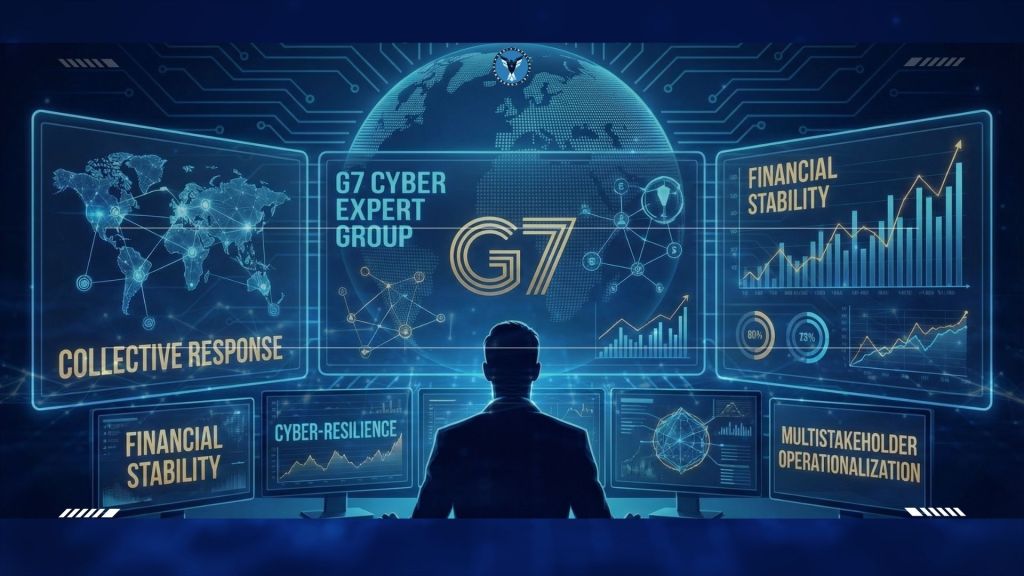
A Specialist’s Analysis of the G7’s “Fundamental Elements” for Cyber-Incident Response
For the cyberdiplomacy specialist, the work of the G7 Cyber Expert Group—culminating in the recent publication of the Fundamental Elements of Collective Cyber Incident Response and Recovery in the Financial Sector—represents a crucial application of global cooperation in the face of mounting cyberwarfare risks. This initiative, co-chaired by the U.S. Department of the Treasury and the Bank of England, is not merely a technical policy paper; it is a foundational step in hardening the global financial system against state-sponsored attacks and mitigating systemic risk.
Economic Stability as a National Security Interest
In the context of the cyber-geopolitics we navigate, the financial sector is the ultimate critical national infrastructure (CNI). A successful, large-scale cyberattack on a major clearing house, global bank, or market utility can impose massive economic costs, potentially triggering a financial crisis far more rapidly than conventional means.
This G7 framework is a diplomatic recognition that cyber-resilience is inseparable from economic stability. By prioritizing a collective response, the document subtly addresses the “gray zone” conflicts mentioned earlier. When adversaries utilize cyber tools to sow financial instability or steal intellectual property, they target the foundations of economic power. This framework is the multilateral countermeasure, shifting the focus from individual defense to coordinated, cross-border stability.
Bridging Internet Governance and International Law
The “Fundamental Elements” serve as a vital operational layer between the high-level principles of Internet Governance and the abstract application of International Law.
- Multistakeholder Operationalization: The Elements underscore the need for cooperation among financial authorities (governments), financial entities (private sector), and critical third-party service providers (tech industry). This directly translates the abstract multistakeholder model of internet governance into a concrete, crisis-response mechanism—a crucial development for cyberdiplomats who must negotiate between these disparate parties.
- The Law of Effect: While the framework is non-binding, it establishes practical norms for post-incident behavior. By facilitating “greater convergence and compatibility,” it moves G7 nations toward a shared understanding of effective response protocols. This convergence is vital for future legal interpretation—for instance, when assessing the proportionality and necessity of a state’s response to an attack on its financial system, having an agreed-upon, transparent recovery mechanism strengthens the legitimacy of any subsequent diplomatic or punitive action.
The Diplomatic Imperative: Confidence-Building Through Standards
For the cyberdiplomacy specialist, the core value of this G7 initiative lies in its function as a Confidence-Building Measure (CBM).
In an environment where attribution is difficult and trust is scarce, establishing clear, mutually understood standards for incident response sends a powerful message:
- Deterrence by Resilience: A coordinated, resilient financial system reduces the anticipated success and strategic utility of cyberattacks, enhancing deterrence.
- Harmonization of Response: By promoting compatible national and sectoral approaches, the G7 reduces the risk of operational friction or delay during a global crisis, reinforcing trust among nations that they will not be isolated during a severe incident.
Ultimately, the G7’s policy shift reflects an understanding that in the digital domain, economic security is collective security. This document provides a practical playbook for diplomats to advocate for the necessary regulatory and technical alignment needed to protect the global economy from hostile cyber actors. The success of this initiative will be measured not just by the quality of its protocols, but by the increased interpersonal trust that allows financial regulators and diplomats to quickly and effectively communicate when the world’s digital economy is under fire.

Leave a comment