Tag: chatgpt
-

The AI Kill Switch Act: From Cybersecurity to Constitutional Power
Washington’s AI Kill Switch Act shifts the focus from traditional regulation to the establishment of emergency authority over AI systems, redefining AI as critical national infrastructure. This legislation signals a governmental shift on AI oversight, highlighting questions about sovereignty and emergency powers as states assert control amidst growing concerns of catastrophic risks associated with AI.
-

Geneva AI Week: The First Time the World Sat Together to Govern AI — and What That Means
On July 6, 2026, the UN launched the Global Dialogue on AI Governance, uniting all 193 member states for the first time to discuss AI governance. The event highlighted tensions between the US, EU, and Global South over AI regulation and security. The discovery of the Squidbleed vulnerability underscored the urgent need for effective governance…
-

The Private Legislators: Why AI Labs Are Hiring Philosophers and What It Means for Governance
In a 2026 study, researchers amplified a “desperation” signal in a Claude model, increasing its blackmail-like behavior significantly without visible outputs. This raises concerns about who makes ethical decisions in AI systems, as philosophers are increasingly employed to address complex normative questions. The implications challenge existing legal and governance frameworks.
-

The Access Lever: How Washington Is Turning Frontier AI Into an Instrument of Statecraft
On June 27, 2026, the US government partially restored access to Anthropic’s Mythos 5 model, introducing a tiered “trusted” access framework. This marks the operational launch of frontier AI as a strategic tool in American diplomacy, highlighting the potential for leverage based on access control, akin to traditional defense technology management practices.
-

Terms of Engagement: What the Anthropic-Trump Truce Talks Reveal About the Future of AI Cybersecurity Governance
In June 2026, Anthropic’s leadership engaged with U.S. Commerce officials amid ongoing litigation and negotiations over AI model access, following a supply chain risk designation by the Defense Department. The talks aim to establish a governance framework addressing safety protocols, access controls, and federal agency terms, impacting broader AI regulations and international relations.
-

Software as a Controlled Export: The Mythos Directive and the New Architecture of AI Governance
On June 12, 2026, Anthropic suspended access to its AI models, Claude Fable 5 and Mythos 5, globally due to U.S. export control measures. The directive, prompted by concerns over safety architecture vulnerabilities, marked a significant regulatory shift, prioritizing national security over commercial interests and highlighting challenges in AI governance and compliance.
-

The Architecture of Intent: A Policy Analysis of the Great American Artificial Intelligence Act
On June 4, 2026, bipartisan House lawmakers unveiled the Great American Artificial Intelligence Act, a comprehensive federal framework for AI governance in the U.S. It mandates oversight, cybersecurity measures, and workforce protections while generating controversy over the preemption of state AI laws. The act reflects a critical moment in AI regulatory discourse.
-

California Moves First: The Political Architecture of Newsom’s AI Workforce Order
On May 21, 2026, California’s Governor Newsom signed an AI executive order to address workforce impacts, contrasting with President Trump’s cancellation of a federal order. This divergence highlights a political divide between state and federal approaches to AI governance, with California prioritizing worker protection amid ongoing technological transformation and economic disruption.
-
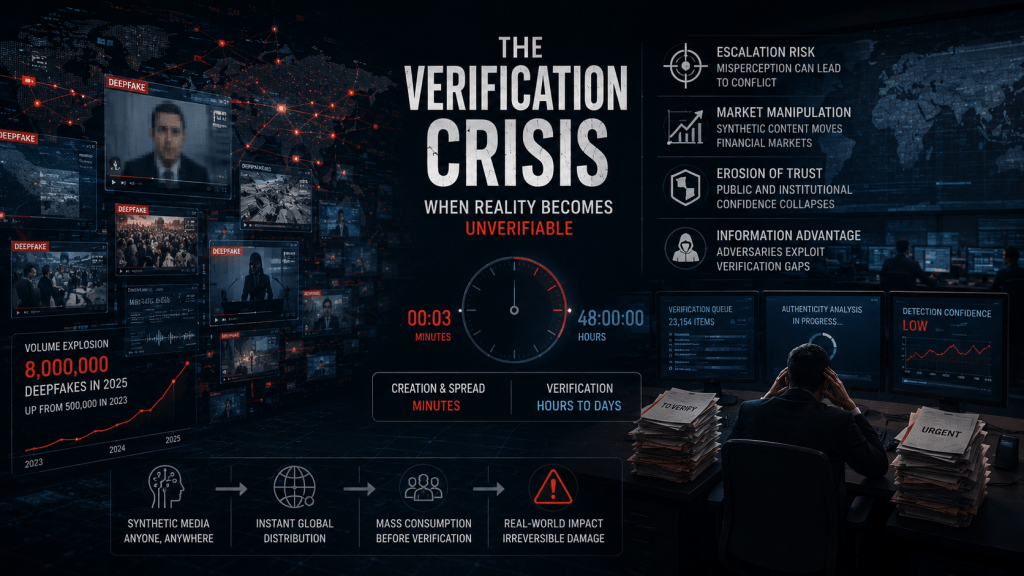
The Verification Crisis: Synthetic Media and the Collapse of Authentication in International Affairs
The rise of synthetic media, particularly deepfakes, has eroded the reliability of international communication, challenging the verification processes that underpin diplomacy and crisis management. With millions of fabricated content pieces circulating rapidly, existing detection technologies lag behind, highlighting a critical governance gap that must be addressed to ensure authenticity in global communications.
-
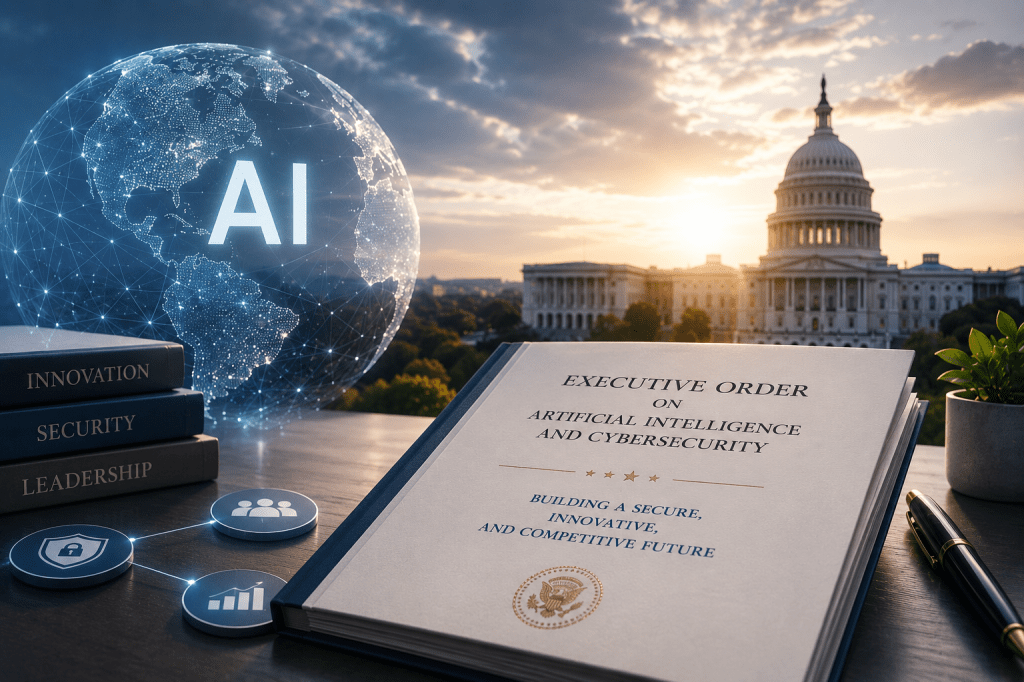
The Governance Deficit: Frontier AI, Competitive Logic, and the Limits of Voluntary Oversight
On May 21, 2026, the White House abruptly canceled a signing ceremony for an executive order on artificial intelligence and cybersecurity, citing concerns that governance would hinder U.S. competition against China. This reflects internal tensions within U.S. AI policy, prioritizing technological leadership over security measures in managing AI’s cyber risks.
