
Tag: history
-

Broad Signature, Narrow Ratification: The UN Cybercrime Convention’s Uncertain Path to Force
The United Nations Convention against Cybercrime has garnered signatures from over seventy states, yet only three have ratified it as of mid-2026. The disparity between signatures and ratifications highlights a lack of legal commitment. As the signature window closes in December 2026, the treaty’s effectiveness relies on states converting signatures into binding agreements.
-

Packets Across the Border: The AzerTelecom-Telecom Armenia Agreement and the Quiet Diplomacy of Digital Infrastructure
On June 22, 2026, AzerTelecom and Telecom Armenia signed a significant agreement to route international internet traffic through Azerbaijani territory, marking a shift after decades of disconnection. This technical decision, while commercially logical, symbolizes deeper political complexities, reflecting the unresolved humanitarian and territorial conflicts between Armenia and Azerbaijan.
-

The Floating Blind Spot: How the World’s Most Critical Infrastructure Became Its Most Vulnerable
Maritime cyber incidents doubled in 2025. Ninety percent of global trade moves by sea. And the vessels carrying it run on software architecture that was never designed to be connected, governed by regulations that were never designed to be enforced, crossing chokepoints that were never designed to survive a coordinated digital attack. By Vladimir Tsakanyan,…
-
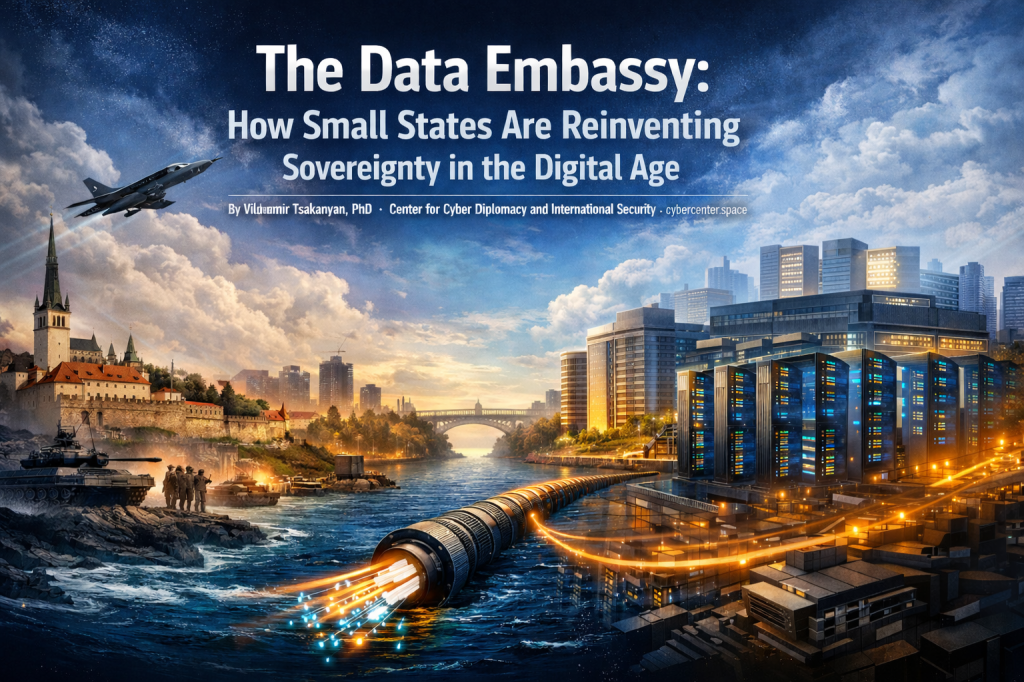
The Data Embassy: How Small States Are Reinventing Sovereignty in the Digital Age
In response to historical threats, Estonia established a data embassy in Luxembourg to safeguard its government data under diplomatic immunity. This innovative approach transcends traditional concepts of sovereignty tied to territory, reflecting a new model for state continuity amid digital governance challenges. However, legal frameworks to support this model remain underdeveloped.
-

China’s Deep-Sea Cable Cutter: A New Front in Undersea Warfare?
China’s new deep-sea cable-cutting device, capable of operating at 4,000 meters, raises global security concerns due to its potential use in asymmetric warfare. This advancement prompts reevaluation of maritime defense strategies amid rising geopolitical tensions.
