
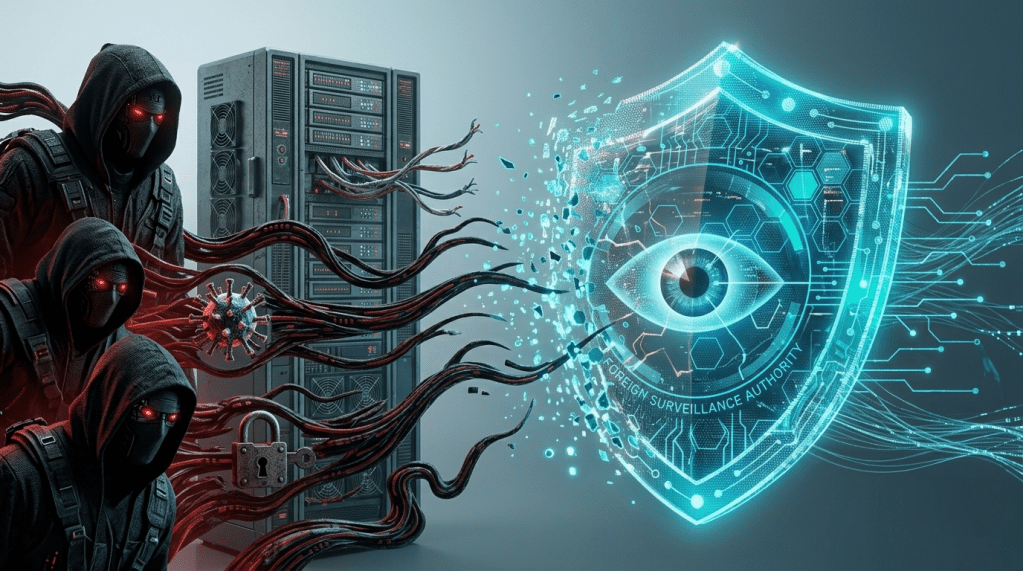
Congress is once again playing a high-stakes game of chicken with Section 702 of the Foreign Intelligence Surveillance Act (FISA). To some, it’s a vital shield against digital Armageddon; to others, it’s a “backdoor” into the private lives of Americans. As the April 2024 extension finally hits its expiration date, the debate has reached a fever pitch.
But what actually happens if the plug is pulled? For the average person, the phrase “intelligence blackout” sounds like a plot point from a spy movie. In reality, the mechanics of a shutdown—and the true timeline of its impact—are much more nuanced than the headlines suggest.
Here is an analysis of what happens if the U.S. government loses its most powerful digital surveillance authority.
The “Dead Man’s Switch”: Why the Lights Don’t Dim Instantly
The biggest myth about Section 702 is that the screens in every intelligence agency will go static the moment the clock strikes midnight. Fortunately, the law has a built-in “buffer” that keeps the gears turning for a while.
Under Section 702, the government submits “certifications” to a secret court (the FISC). These are essentially annual broad-stroke permissions to track foreign threats like terrorist cells or state-sponsored hackers.
Even if the law expires today, any certification approved before the deadline remains valid for up to one year. This creates a “grandfather clause” that prevents an immediate intelligence vacuum. It’s not an instant blackout; it’s a slow-moving sunset that gives the government a few months of breathing room to convince Congress to change its mind.
The Cybersecurity Fallout: Flying Blind Against High-Tech Sabotage
While the world won’t end on day one, the eventual loss of 702 would fundamentally change how the U.S. defends your data. Over the last decade, this program has evolved from a counter-terrorism tool into the frontline of America’s cyber defense.
Because so much of the world’s internet traffic flows through U.S. servers, Section 702 allows the NSA to “tap into the stream” to catch foreign hackers using our own infrastructure against us. If that authority is dismantled, the ripple effects are massive:
- The “Ghost” Hacker Problem: Agencies would lose the ability to live-track hackers from Russia, China, or North Korea as they hop across U.S. cloud servers.
- Ransomware Roulette: The FBI uses 702 to intercept ransomware gangs before they lock up hospitals or power grids. Without it, they lose the “early warning system” that identifies these attacks in their infancy.
- Warning System Failure: Currently, if the government sees a foreign actor targeting a specific U.S. company, they can issue a warning. Without 702, those red flags may never pop up until the damage is already done.
The Alternatives: Trading a Scalpel for a Sledgehammer
If 702 disappears, the government has to go back to the “old ways”—which are notoriously slow, clunky, and bureaucratic.
- The Paperwork Nightmare: Instead of broad certifications, agents would have to seek individual warrants for every single foreign target. While that sounds good for privacy, it’s a disaster for speed. You cannot effectively write 10,000 individual warrants to stop a fast-spreading global computer virus.
- The Overseas Gamble: The IC could try to gather data entirely on foreign soil (under Executive Order 12333), but they lose the “home-field advantage.” They can’t legally compel U.S. tech companies to help them, making the intelligence far less reliable.
The Heart of the Fight: Your Privacy vs. Their Safety
The reason we are even at this crossroads is a debate over “incidental collection.” When the government monitors a foreign target, it inevitably sweeps up the emails and messages of the Americans they are talking to.
The political firestorm centers on the FBI’s ability to search those databases for American citizens without a traditional warrant. For privacy advocates, this is a bridge too far. For the intelligence community, it’s a necessary tool to find “the needle in the haystack” before a domestic attack occurs.
The Bottom Line
If Section 702 is dismantled, the internet won’t break tomorrow, and the world won’t go silent overnight. However, the “invisible shield” that monitors global threats would slowly dissolve. The true cost of a shutdown isn’t a sudden explosion—it’s a gradual loss of the ability to see a digital punch coming before it lands.

Leave a comment