
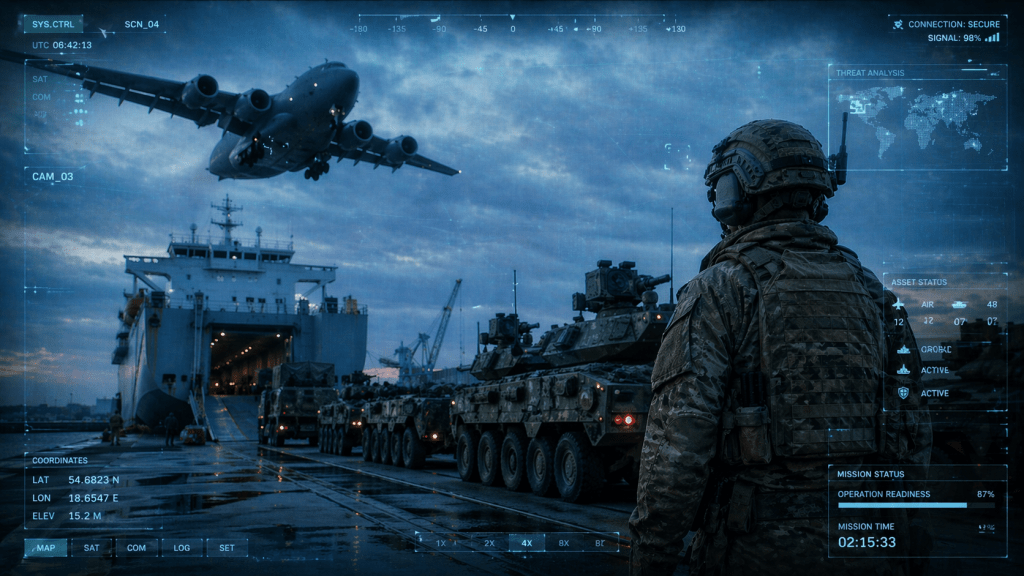
The era of “strategic autonomy” is no longer a French philosophical debate—it has become a survival manual for the European Union. As of April 2026, the continent is undergoing its most significant military transformation since the end of the Cold War.
Following the analysis of recent reports from Politico, the IISS, and major European outlets like Le Monde and Deutsche Welle, it is clear that the transition from the “peace dividend” to a “war economy” is now in full swing.
1. The Numbers: A Record-Breaking Rearmament
European defense spending has shifted from a reluctant obligation to a primary national priority.
- The 2% Floor: What was once a ceiling is now a basement. Most EU member states are now targeting 3% of GDP for defense spending by 2030.
- The German Engine: Berlin has solidified its role as Europe’s military heavyweight, with its defense budget crossing the €100 billion mark to address years of underinvestment.
- Eastern Sentinel: Countries like Poland and the Baltic states are leading the charge, with some allocating nearly 4% of GDP to create a formidable buffer on the Eastern Flank.
2. “Military Schengen” and Infrastructure
A major theme across European defense circles is the “Military Schengen.” This initiative aims to remove the bureaucratic red tape that currently slows the movement of troops and equipment across internal borders.
The European Commission’s Readiness 2030 plan focuses on four “European Readiness Flagships”:
- The European Air Shield: An integrated, continent-wide missile defense system.
- The Baltic Drone Wall: A high-tech surveillance and defense perimeter utilizing AI-driven sensors.
- The Cyber-Rapid Response: A unified command to protect critical energy and digital infrastructure from hybrid threats.
3. The Industrial Challenge: Fragmentation vs. Unity
The primary hurdle remains fragmentation. Currently, Europe operates over 170 different weapons systems, compared to fewer than 30 in the United States. This lack of standardization drives up costs and complicates logistics.
To solve this, the EU has launched the SAFE (Security Action for Europe) instrument—a €150 billion loan facility designed to incentivize member states to “buy European” and co-develop next-generation hardware like the Future Combat Air System (FCAS).
4. Why Now? The “Two-Front” Pressure
Analysis from across the continent points to a dual realization:
- The Russia Factor: European intelligence agencies agree that the late 2020s represent a high-risk window for potential Russian expansionism beyond Ukraine.
- Transatlantic Uncertainty: A more “transactional” approach from Washington has convinced Brussels that while NATO remains the bedrock, Europe must possess the independent capacity to act if U.S. interests are diverted to other theaters.
Conclusion: A Continent Coming of Age
The “Defense Moment” is about more than just buying tanks; it represents a fundamental shift in the European identity. By 2030, the EU aims for “full defense readiness.” While the transition is expensive and politically complex, the consensus is clear: to maintain peace, Europe must finally be prepared for war.

Leave a Reply