Tag: artificial-intelligence
-
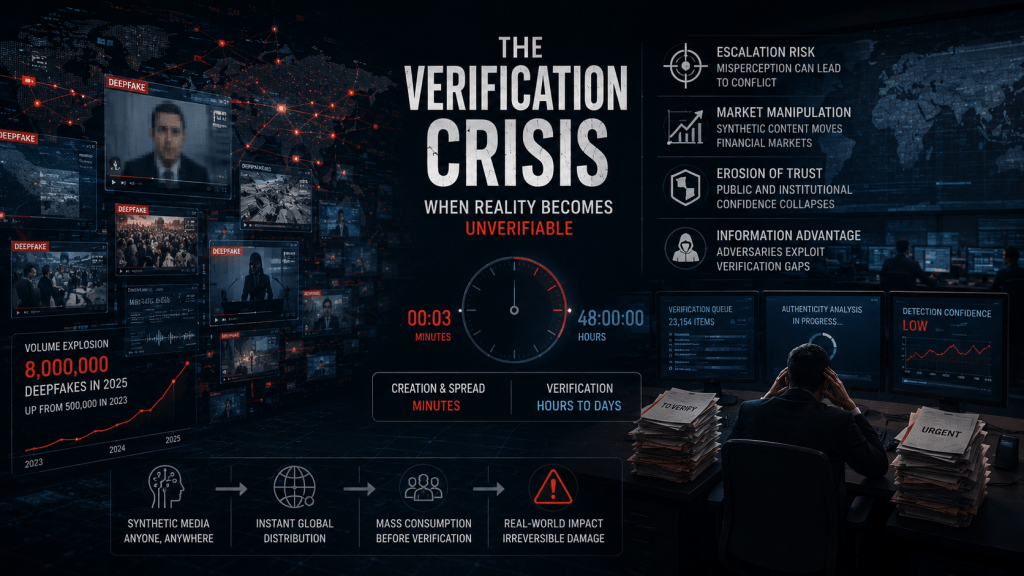
The Verification Crisis: Synthetic Media and the Collapse of Authentication in International Affairs
The rise of synthetic media, particularly deepfakes, has eroded the reliability of international communication, challenging the verification processes that underpin diplomacy and crisis management. With millions of fabricated content pieces circulating rapidly, existing detection technologies lag behind, highlighting a critical governance gap that must be addressed to ensure authenticity in global communications.
-

When the Watchdog Leaks: The CISA Credential Exposure and the Institutional Crisis It Reveals
For six months, sensitive US government credentials were exposed in a public repository, raising significant cybersecurity concerns. The incident highlights deficiencies in CISA’s governance and oversight, exacerbated by staff reductions and leadership changes. Lawmakers demand accountability, emphasizing the need for stronger security measures and improved contractor management to prevent future breaches.
-
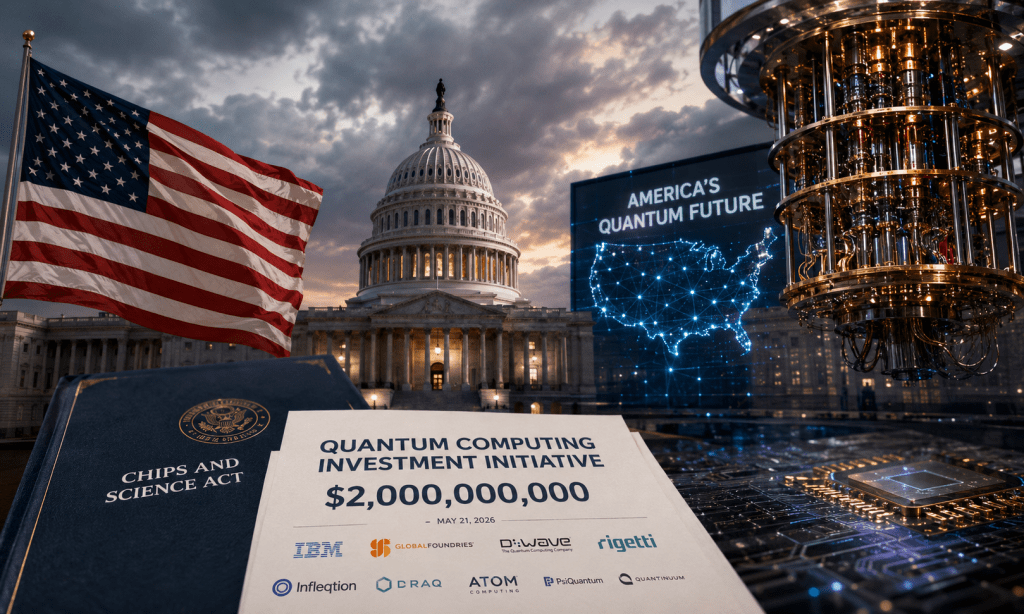
The Quantum Inflection Point: Industrial Policy, Equity Stakes, and the Cybersecurity Implications of America’s $2 Billion Bet
On May 21, 2026, the Trump administration announced a $2 billion investment in nine quantum-computing firms, acquiring equity stakes. This investment aims to enhance U.S. technological competitiveness against China while raising concerns over national security and the cybersecurity implications of quantum advancements, particularly the potential to break existing encryption systems.
-
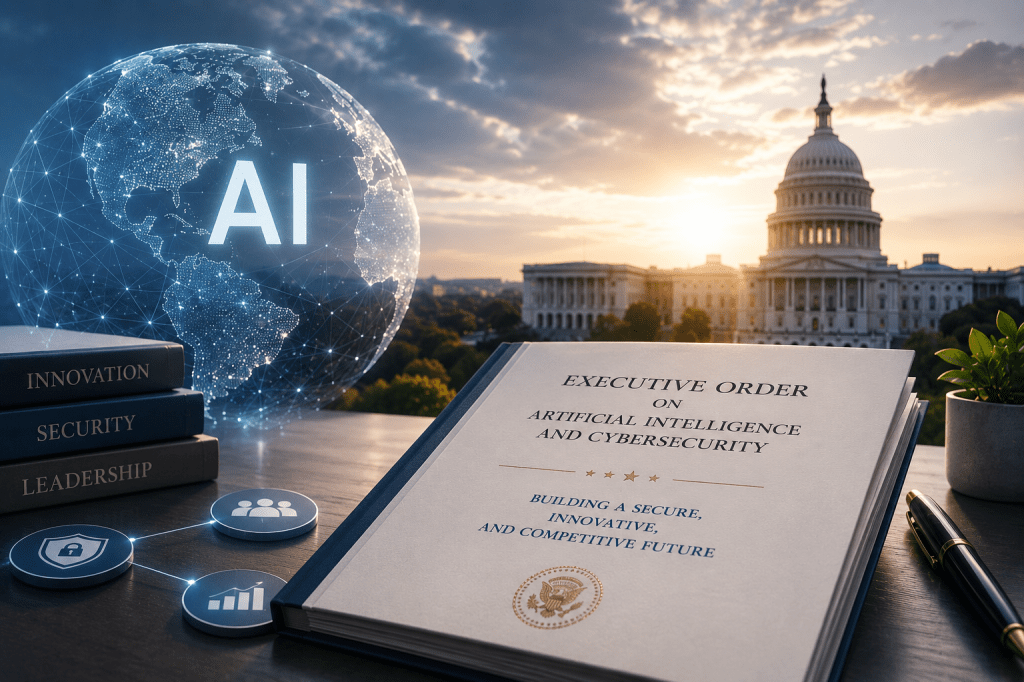
The Governance Deficit: Frontier AI, Competitive Logic, and the Limits of Voluntary Oversight
On May 21, 2026, the White House abruptly canceled a signing ceremony for an executive order on artificial intelligence and cybersecurity, citing concerns that governance would hinder U.S. competition against China. This reflects internal tensions within U.S. AI policy, prioritizing technological leadership over security measures in managing AI’s cyber risks.
-
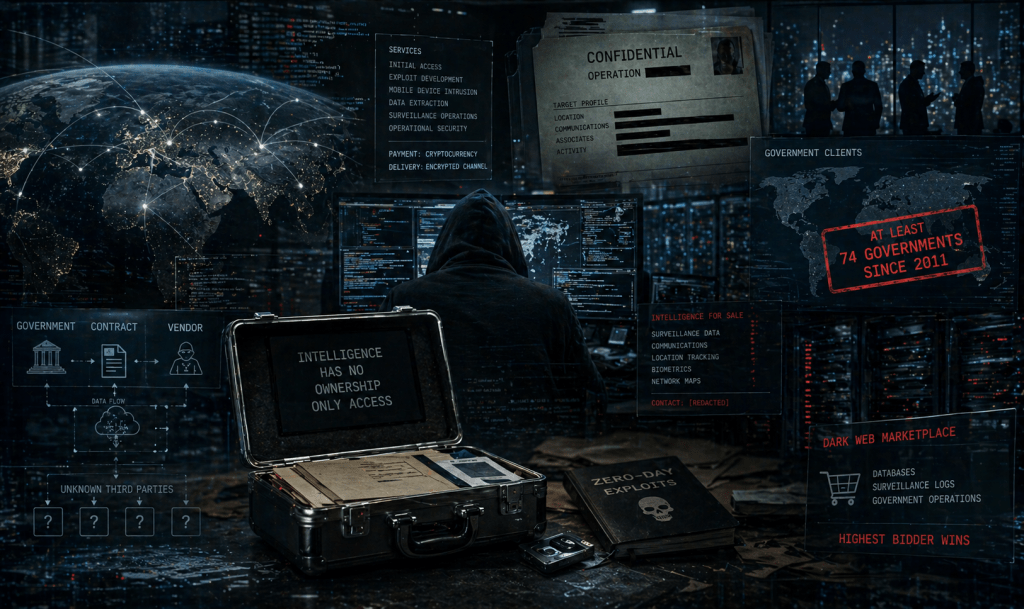
The Market for Secrets: Inside the Cyber Mercenary Economy
Since 2011, at least 74 governments have employed private hackers, raising concerns about the intelligence transfer and its subsequent vulnerability. The cyber mercenary market, now valued at $12 billion, facilitates hidden operations while posing significant risks, such as human rights abuses and data breaches, without adequate regulatory frameworks.
-
The Mythos of Mythos: What Anthropic’s AI Security Claims Really Tell Us
Anthropic’s Claude Mythos claims to have found vulnerabilities across major operating systems and browsers based on extrapolated data, raising fears to bolster its market position. While it demonstrates advancements in AI-assisted vulnerability discovery, the framing serves business interests more than public safety. Genuine policy discussions on AI governance remain essential.
-
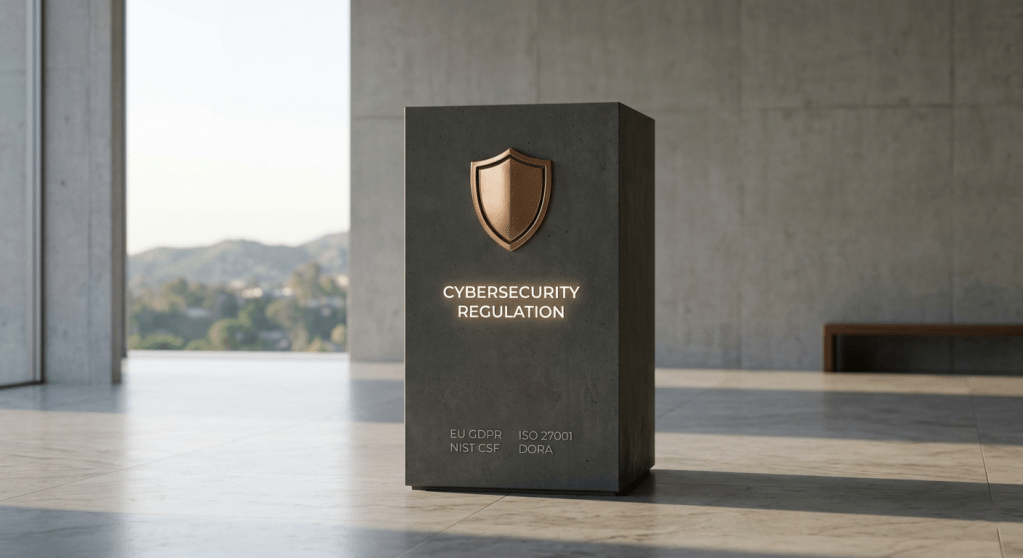
The Compliance Illusion: Why Cybersecurity Regulation Is Producing the Wrong Kind of Security
Governments are rapidly implementing cybersecurity regulations, but the fragmented nature and differing timelines often hinder effectiveness. Compliance can overshadow actual security, creating a two-tier environment where larger organizations exploit gaps while smaller entities struggle. Improved regulation should focus on outcomes rather than mere documentation to enhance security and accountability.
-
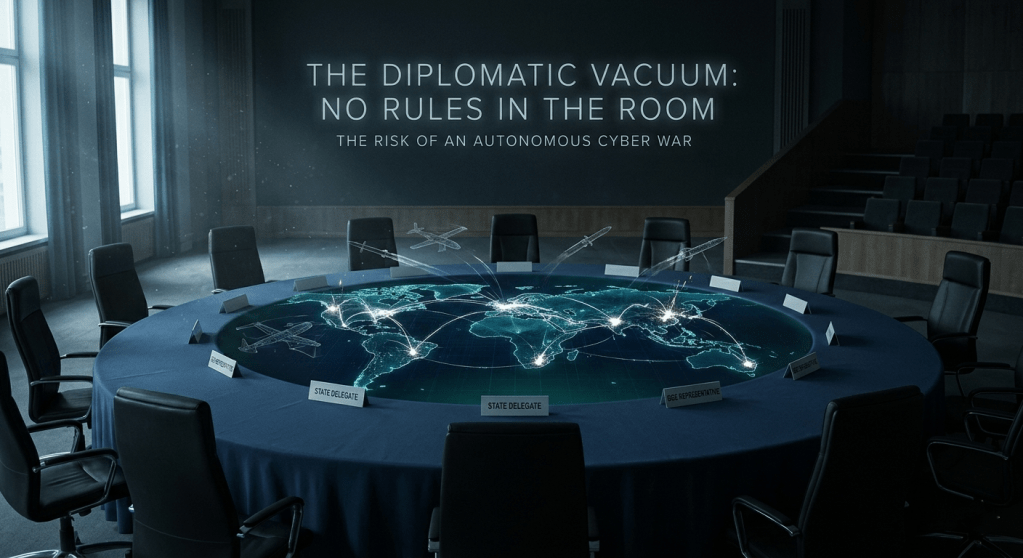
No Rules in the Room: The Diplomatic Vacuum at the Heart of Autonomous Cyber War
In March 2020, a Turkish-manufactured autonomous drone reportedly hunted down and engaged a human target in Libya without receiving a command from any human operator. The UN Panel of Experts documented the incident. No government acknowledged it. No legal mechanism was triggered. No one was held responsible. That episode is not a warning of what…
-
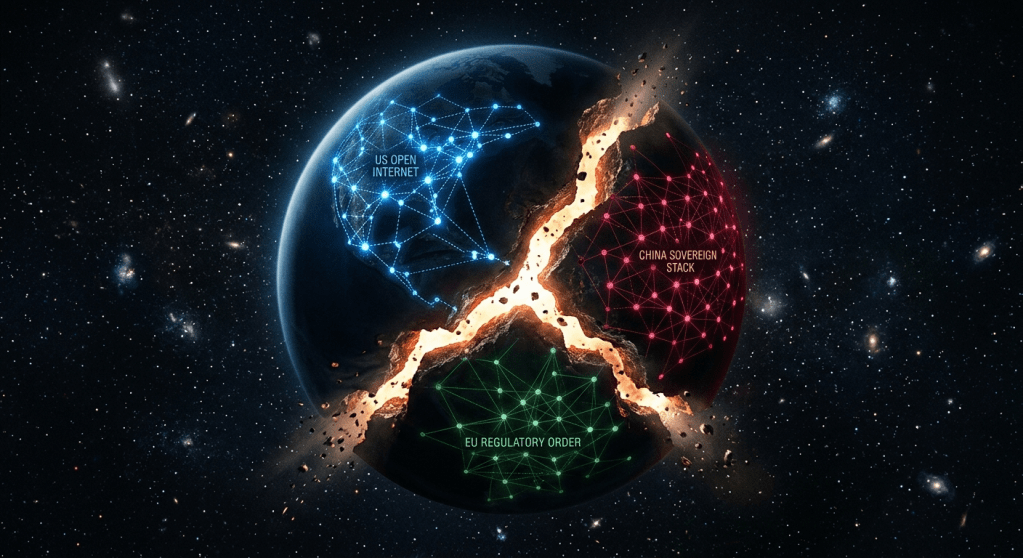
The Splinternet Doctrine: How Nation-States Are Redrawing the Map of Cyberspace
The internet’s borderless nature is being systematically dismantled, with countries pursuing digital sovereignty through distinct governance models. The U.S. advocates a free internet, while China promotes a sovereign model. This fragmentation poses challenges for diplomacy, commerce, and security, reshaping the landscape of global internet governance into a complex, multi-jurisdictional environment.
-
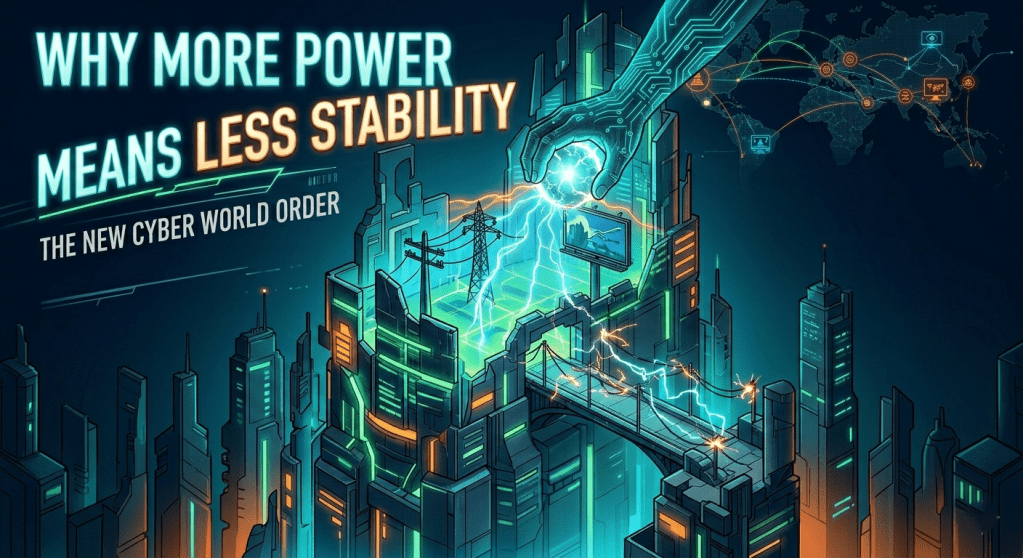
Why More Power Means Less Stability: 5 Surprising Truths About the New Cyber World Order
Cybersecurity faces complexity; traditional defenses may destabilize as middle powers emerge as stabilizers.
