Tag: security
-

Months, Not Years: The Five Eyes Advisory and What It Reveals About the Intelligence Community’s AI Threat Assessment
On June 23, 2026, the U.S. and allied intelligence agencies issued a significant statement warning that rapid AI advancements can outdate cybersecurity risk assumptions within months. This marks a shift in communication strategy, urging organizations to adapt their defenses to evolving threats faster than current governance frameworks allow.
-

The Quantum Directive: Two Executive Orders, Two Strategic Objectives, One Compressed Timeline
On June 22, 2026, President Trump signed two executive orders outlining a comprehensive quantum technology framework. The first aims for a commercially viable quantum computer by 2028, while the second mandates a transition to post-quantum cryptography by 2030 and 2031. These measures address national security threats, particularly from China, as the US seeks to maintain…
-

Packets Across the Border: The AzerTelecom-Telecom Armenia Agreement and the Quiet Diplomacy of Digital Infrastructure
On June 22, 2026, AzerTelecom and Telecom Armenia signed a significant agreement to route international internet traffic through Azerbaijani territory, marking a shift after decades of disconnection. This technical decision, while commercially logical, symbolizes deeper political complexities, reflecting the unresolved humanitarian and territorial conflicts between Armenia and Azerbaijan.
-

Terms of Engagement: What the Anthropic-Trump Truce Talks Reveal About the Future of AI Cybersecurity Governance
In June 2026, Anthropic’s leadership engaged with U.S. Commerce officials amid ongoing litigation and negotiations over AI model access, following a supply chain risk designation by the Defense Department. The talks aim to establish a governance framework addressing safety protocols, access controls, and federal agency terms, impacting broader AI regulations and international relations.
-

The Fraud Economy: How AI-Enabled Financial Crime Became the Defining Cyber Threat of 2026
In 2025, 73% of organizations were impacted by cyber-enabled fraud, surpassing ransomware as the primary concern for CEOs. AI-enhanced fraud, with growing sophistication and commoditization via Fraud-as-a-Service, poses significant operational challenges. A disconnect exists between CEO threat perceptions and CISO defenses, hindering effective governance and response to evolving fraud risks.
-

Software as a Controlled Export: The Mythos Directive and the New Architecture of AI Governance
On June 12, 2026, Anthropic suspended access to its AI models, Claude Fable 5 and Mythos 5, globally due to U.S. export control measures. The directive, prompted by concerns over safety architecture vulnerabilities, marked a significant regulatory shift, prioritizing national security over commercial interests and highlighting challenges in AI governance and compliance.
-

Cybersecurity Preparedness for the 2026 FIFA World Cup: A Threat Landscape Assessment
The FIFA World Cup 2026, commencing on June 11, will be the largest sporting event ever, with heightened cybersecurity threats. Analysis shows a diverse threat landscape from criminals, state actors, and hacktivists, compounded by the reduced capacity of U.S. cybersecurity agencies, raising concerns about potential attack effectiveness during the tournament.
-
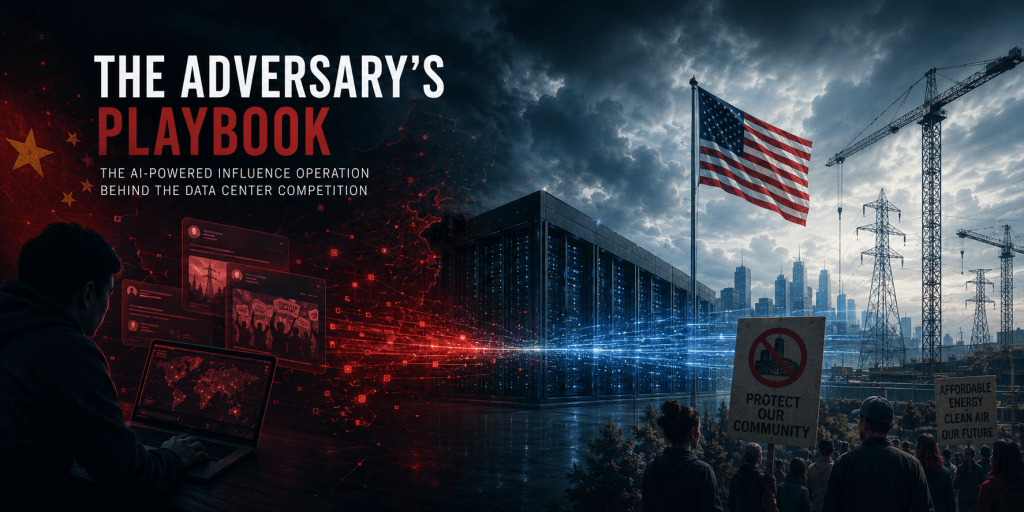
The Adversary’s Playbook: What China’s AI-Powered Influence Operation Reveals About the Data Center Competition
On June 10, 2026, OpenAI’s report revealed two China-linked campaigns that utilized ChatGPT to influence U.S. debates on AI infrastructure and trade policy. Although these operations lacked significant impact, they underscored a strategic approach, aiming to exploit domestic political opposition to hinder U.S. AI development. The events illustrate the complexities of foreign influence utilizing commercial…
-

Toward a Dedicated Cyber Service: The Strategic Case for America’s Next Military Institution
The Commission on US Cyber Force Generation published its findings on June 1, 2026, emphasizing the need for a dedicated Cyber Force to enhance military capability in a rapidly evolving threat landscape. This initiative aims to foster a professional culture, streamline talent acquisition, and develop robust cyber warfare doctrine to address future security challenges effectively.
-
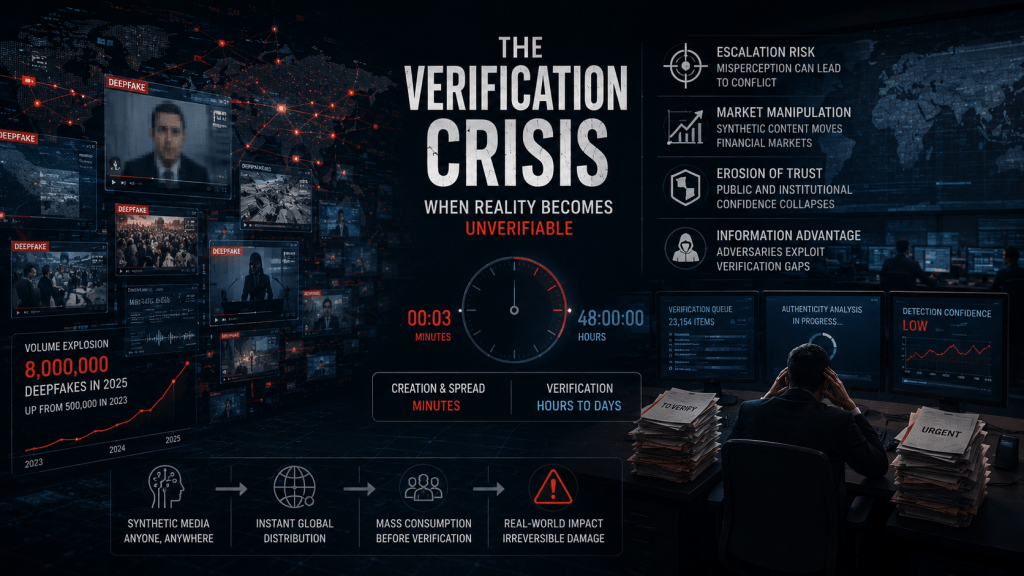
The Verification Crisis: Synthetic Media and the Collapse of Authentication in International Affairs
The rise of synthetic media, particularly deepfakes, has eroded the reliability of international communication, challenging the verification processes that underpin diplomacy and crisis management. With millions of fabricated content pieces circulating rapidly, existing detection technologies lag behind, highlighting a critical governance gap that must be addressed to ensure authenticity in global communications.
