
Tag: security
-

When the Watchdog Leaks: The CISA Credential Exposure and the Institutional Crisis It Reveals
For six months, sensitive US government credentials were exposed in a public repository, raising significant cybersecurity concerns. The incident highlights deficiencies in CISA’s governance and oversight, exacerbated by staff reductions and leadership changes. Lawmakers demand accountability, emphasizing the need for stronger security measures and improved contractor management to prevent future breaches.
-

The Quantum Inflection Point: Industrial Policy, Equity Stakes, and the Cybersecurity Implications of America’s $2 Billion Bet
On May 21, 2026, the Trump administration announced a $2 billion investment in nine quantum-computing firms, acquiring equity stakes. This investment aims to enhance U.S. technological competitiveness against China while raising concerns over national security and the cybersecurity implications of quantum advancements, particularly the potential to break existing encryption systems.
-
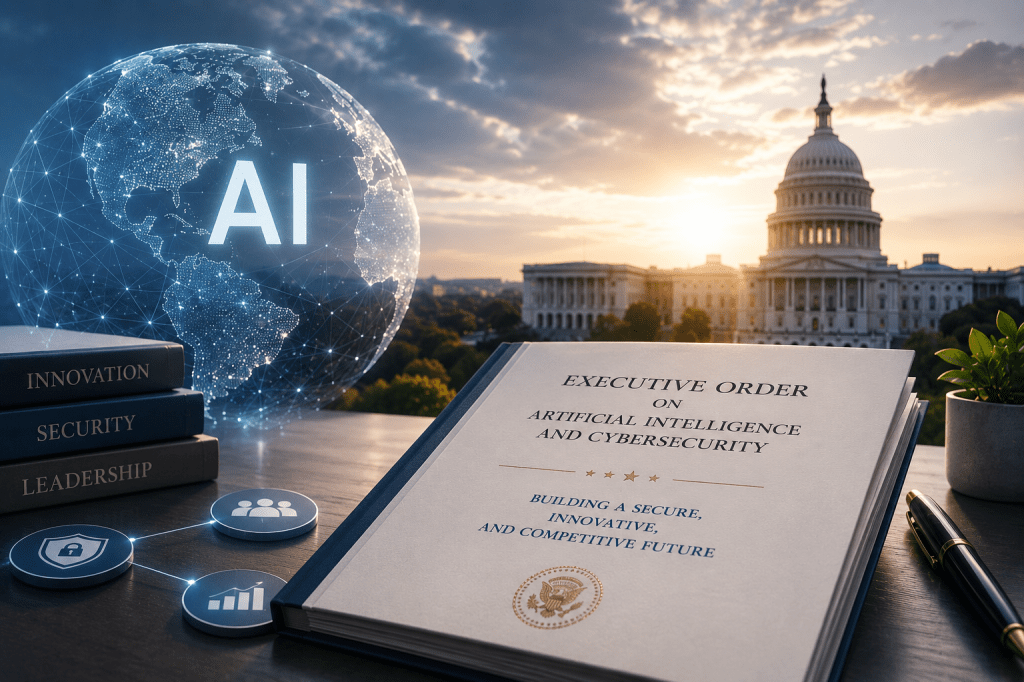
The Governance Deficit: Frontier AI, Competitive Logic, and the Limits of Voluntary Oversight
On May 21, 2026, the White House abruptly canceled a signing ceremony for an executive order on artificial intelligence and cybersecurity, citing concerns that governance would hinder U.S. competition against China. This reflects internal tensions within U.S. AI policy, prioritizing technological leadership over security measures in managing AI’s cyber risks.
-

Nvidia’s China Play: The 4 Companies First in Line After Trump’s Beijing Summit
Nvidia’s potential comeback in China centers on President Trump’s summit with Xi Jinping, leading to the clearance of H200 AI chip sales to select Chinese firms like Alibaba, Tencent, JD.com, and Lenovo. However, while the deal is approved, Beijing’s hesitance leaves its practical implementation unclear, affecting Nvidia’s revenue prospects amidst geopolitical tensions.
-

From Zero Trust to the UN: The Cybersecurity Policy Trends Shaping International Relations
The concept of Zero Trust has evolved from a cybersecurity framework to a national security doctrine due to persistent state-sponsored cyber threats by actors like Volt Typhoon. This shift emphasizes continuous verification over perimeter-based trust, impacting international relations and regulatory frameworks. The convergence of cybersecurity policy and geopolitics defines the 2026 landscape.
-

Corporate Diplomacy and Strategic Contradiction: The Beijing Delegation in Context
The May 12, 2026, US presidential delegation to Beijing, led by President Trump, reveals tensions in US-China technology relations. It raises concerns about the alignment between America’s multilateral initiatives, like Pax Silica, and bilateral negotiations. The presence of key industry figures signifies strategic stakes, compelling allied governments to reevaluate the credibility of US technology governance.
-

Minerals Are the New Code: Norway, Pax Silica, and the Alliance Being Built Around the AI Supply Chain
On May 6, 2026, Norway joined the Pax Silica initiative, marking a significant diplomatic move in reshaping global AI supply chains. This non-binding declaration aims to establish a stable technology order under U.S. leadership, promoting interdependence among members while reducing reliance on China. Norway’s strategic resources bolster the initiative’s overall resilience.
-

The Floating Blind Spot: How the World’s Most Critical Infrastructure Became Its Most Vulnerable
Maritime cyber incidents doubled in 2025. Ninety percent of global trade moves by sea. And the vessels carrying it run on software architecture that was never designed to be connected, governed by regulations that were never designed to be enforced, crossing chokepoints that were never designed to survive a coordinated digital attack. By Vladimir Tsakanyan,…
-

From Vibe Coding to Policy Insight: Introducing the CCD-IS Analytical Dashboard
The CCD-IS Cyber Diplomacy & Cybersecurity Policy Dashboard is an analytical platform designed to track and research global cyber diplomacy and cybersecurity trends. It consolidates cyber incidents, policy changes, and geopolitical signals to aid researchers and policymakers in understanding the impact of cyber activities on international relations.
-
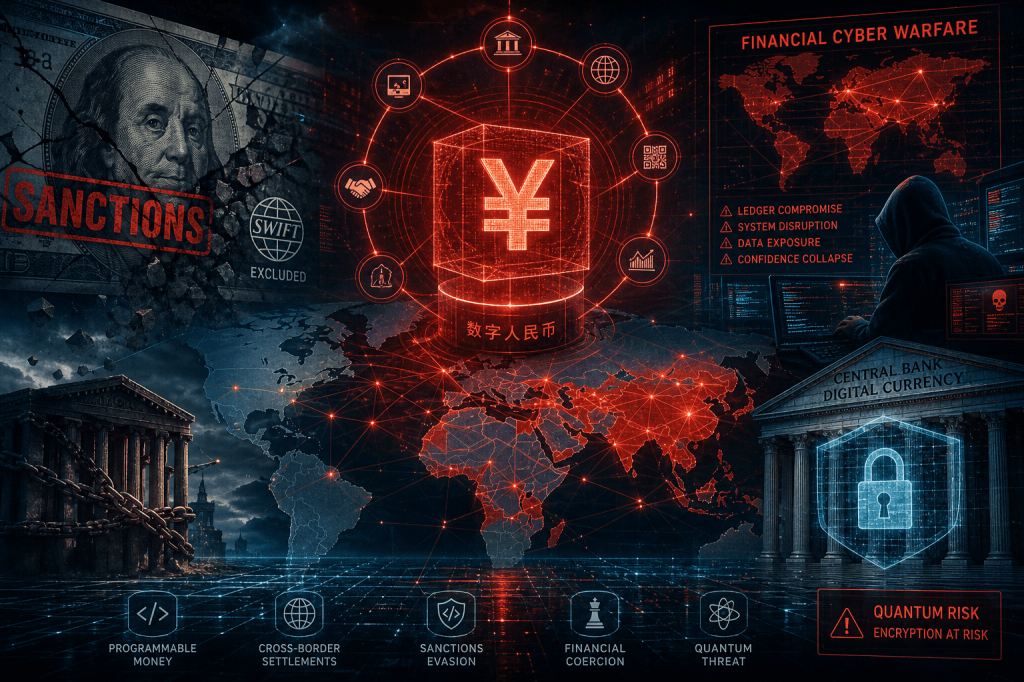
The CBDC Gambit: How Digital Currencies Are Becoming the New Tool of Financial Cyber Warfare
Over 130 countries are developing digital currencies, creating a highly centralized yet vulnerable financial infrastructure. The digital yuan, specifically, aims to bypass Western financial systems, making sanctions less effective. Central bank digital currencies pose significant cybersecurity risks, with potential attacks threatening system integrity and public trust, marking a new era in financial warfare.
